San Jacinto Tram to Summit, May 31, 2010


Syrio and RB debate water treatment options in Round ValleyDown in the valley, I could see the desert smog-haze smoking in the mid-day sun. Around us, I saw people looking at our gear with quizzical expressions. Five feet away from us, I saw the third shuttle heading up to the tram station. Behind me, I could hear Rude Boy (“RB”) cursing at his shoe. I smiled. It wouldn’t be an expedition without problems. I turned around, and saw that RB was actually cursing at his shoelaces, which were now lying in several unraveled pieces, rather than his shoes. Calmly, I put my pack back down in the parking lot next to Syrio and Jaime, and quipped to RB, “You know, when I said I’d teach you the ways of the ninja mountaineer, this wasn’t quite what I had in mind.”

It was Memorial Day, and the four of us were at the parking lot just below the Palm Springs tram shuttle. We had made it there by overcoming our holiday weekend inertia, a leaky ceiling, crappy traffic on the I-215, and a slew of preparatory e-mails. We had come to Palm Springs not to ride the incredible spinning tram with everyone else, but to hopefully bag the peak. Really, bagging the peak was the secondary objective in my mind; the primary objective was to see how half of the group handled snow, ice, and other mountaineering challenges prior to climbing Whitney. That’s right. Whitney. I was going back to lead another group. Clearly, either there was some unfinished business there, or I was a slow learner, or maybe the mountain had some sort of subliminal subconscious pull in my mind. In 2007, I had led my second group up Whitney in October, the “First and Last Pizza Port Mountaineering Expedition”, and had placed five out of six people on the summit. (http://last-adventurer.squarespace.com/last-adventurers-fieldnotes/2008/1/2/the-first-and-last-pizza-port-mountaineering-expedition-day.html)

After that expedition, a myriad of things happened, and I could spend a million words discussing each of them, but for now, the pertinent information is that I was going back to Whitney, this time in the summer of 2010 with a new group of eight, in the “Who Dares Wins” expedition. I was going to make sure the group was as ready as they could be. This is why I was at San Jacinto, on a perfect blue sky holiday Monday. If you’ve never been, the Palm Springs Tram leaves the desert valley floor at 2500 feet, and heads up to the station at 8500 feet near the San Jacinto summit. It’s probably the easiest way to climb 6000 feet I’ve ever experienced; and according to the promotional material, it is the largest rotating aerial tramway in the world. (http://www.pstramway.com/).

Since the sun was rolling across the sky, I sized up the shoelace situation, and applied some master ninja mountaineering powers to the problem. Since mountaineering boots come with standard extra long laces, I cut off the surplus, and knotted them together into one new super-lace with which RB was able to use to tie his shoe. With that crisis solved, we were able to catch the tram and hit the trail at the top. The San Jacinto summit trail curves in a giant “U” from the tram station, through Long Valley, and then up into Round Valley, switchbacks, and then the summit. We acquired our permit from the Ranger Station (free), and began the ascent with lots of energy. As we headed up the trail, I was surprised to see that the upper reaches of the slopes were partially covered with large drifts of snow.

The amount of snow was surprising, because several years back, I had climbed Jacinto a week before Memorial Day, and entirety of the hike had been bone dry. I wasn’t going to complain, however, since I wanted the group to get some snow and ice experience. By the time we had reached Round Valley, they had definitely obtained a fair amount of experience, as the conditions had gone from partial coverage of two-foot drifts, to total coverage. I ski Jacinto yearly in the dead of winter, so I wasn’t concerned about getting lost, however, for a short period of time coming into Round Valley, the trail had disappeared under the snow, causing me to orienteer a route to the Ranger Station at Round Valley.

Summit, 5/31/10

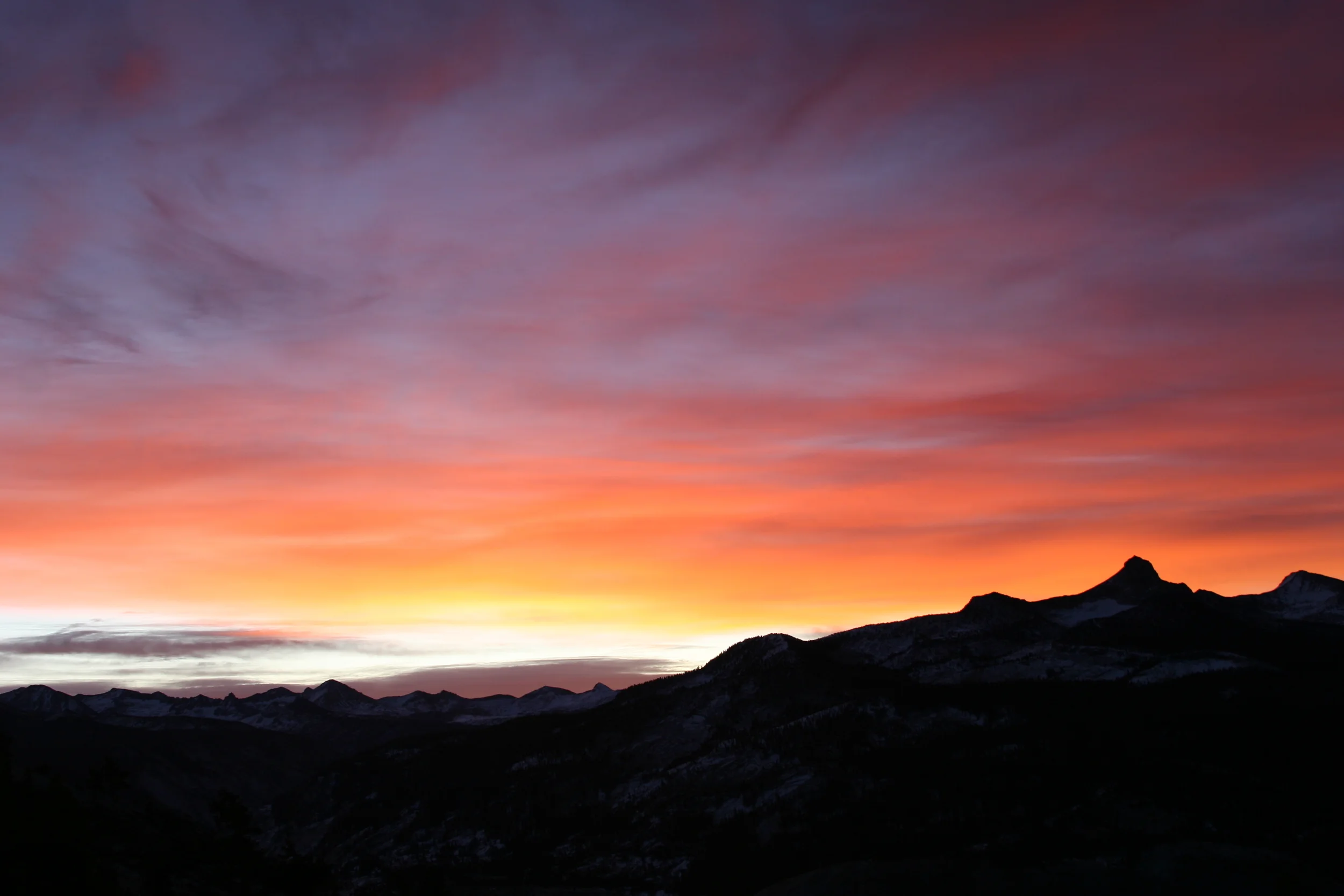
After taking a short break, we continued up toward the peak, only to lose the trail completely at around 9200 feet. Based on my recollection, and my compass skills, we cut across the now completely snow covered terrain to the base of the final summit ascent, where we picked up the trail on again on the switchbacks. The switchbacks were partially melted out, and by that time of the day, the snow was quite slushy, and we post-holed in numerous spots where the drifts still existed. Shortly before the hut, the trail was completely obscured by snow, but we powered on to the summit. On the decent, as it was quite late in the day, there was a fair amount of melting going on, and more post-holing, but as a bonus, we were able to pick up the main trail and follow it back completely, rather than following the route we had marked. It took us a little over seven hours, roundtrip, and by the end of the day, everyone had gained a substantial amount of experience. Overall, it was a great time, and I thought the group did a great job dealing with the adversity that we faced that day. Also, if anyone’s heading to Jacinto in the next couple of weeks, be aware that winter conditions still exist, even though it is now mid-June. See you on the trail!

Lots of snow for the end of May, 2010!

Xterra Mission Gorge 5/15K Trail Run, May 30, 2010


Mission Trails - looking green still!I could hear the birds starting to sing as the sun rose early Sunday morning. I turned over, and went back to sleep. When the alarm went off at seven, I was almost ready to get up. It was a welcome change from the previous two races I had ran, in Vegas (http://last-adventurer.squarespace.com/last-adventurers-fieldnotes/2010/4/29/viva-las-henderson-lake-las-vegas-xterra-trail-run-april-24.html), and Malibu (http://last-adventurer.squarespace.com/last-adventurers-fieldnotes/2010/5/12/xterra-malibu-creek-challenge-trail-run-may-8-2010.html) where I had to get up before the sun just to make it to the courses on time. Compared to those mornings, this Sunday was leisurely. Moreover, the conditions were finally great; it was a warm, clear summer-like day. It was a welcome contrast to the conditions that had postponed the race twice before, where seven consecutive weekends of rain had soaked San Diego.

As I warmed up for the race, I was a little nostalgic – after all, this was the race last year that had brought me back to racing. I had started off that race fast, but then had to tough it out to merely finish. That race had been particularly frustrating because I had lost my prime position in the third mile on one of the last straightaways. As my knee had shot out flames of pain, I watched competitors who I had previously passed dart by me. I had used that memory as motivation as I worked my way back. While there was still a lot of room for improvement, I felt great about where I had come back from. 

Mixed in with the memories of the last year, however, was a bit of mental fatigue. I had run eight races since March. While it wasn’t the mental burden of a race a weekend, it was close. There was little time for adjustments in between races, and almost no time to take off from training. I was a little mentally drained from constantly having to find motivation, and constantly having to find my edge to pass people while sprinting hard for the finish. Back when I was climbing mountains for my non-profit, I had come to a simple epiphany – that completing any challenging event was accomplished first in the mind, then in the body. I had been the most successful on climbs where my mental focus was sharp, as opposed to the ascents that had come after days upon days of straight climbing. Of course, solid physical conditioning was always a huge asset to my mental state.

As I stretched, I realized that being overly focused on the competitive aspects of the last seven races had made racing less fun. I was ready for a break, and I knew that after this race, I’d have a little over a month off before the next series of races began. I knew that by then, I’d be excited and ready to race again. As I finished stretching, I knew that I should have fun with this last race and enjoy the moment. With that in mind, I turned up the music and shook out the tension in my arms. I looked around at the other runners, some with grim, competitive faces, some with nervous eyes, and some with apathetic expressions. I grinned, put on my best devil-may-care smile and stepped toward the start line.

With my relaxed attitude, the race turned out to be a blast. Like last year, the course was well laid out, stretching through fields of native spring growth slowly turning from green to brown, before arcing into a single track section along a seasonal creek, before slowing curving back around to the old Mission Dam and over the bridges and back toward the finish line. As I ran, I let go of the frustrations of earlier races – being sick, being stuck behind slower people in single track areas, and the nagging complaints of aches and small flaws. In the end, it wasn’t my best finish, and my pace was a little off what I had ran competitively in earlier races, but I didn’t care. I felt good about ending the race on a relaxed note, and the series on a high note – I had competed well, met a lot of great people, and had a great time, so that, in the end was what mattered to me. And of course, I’ll be back in these races next year with a drive to improve even further. But until then, I’ll see you all on the trail or road in a month or so, after I climb some mountains and have some other adventures.

Red Tide II, San Diego, May 27, 2010 and on…

I’ll take a quick break from stories about adventuring around the desert to share with my readers something I noticed yesterday – the return of the red tide here locally. Yes, that’s right – it’s baaaaaack – and with a vengeance! As I was doing my tune up run for the Xterra 5/15K at Mission Gorge (http://www.trailrace.com/missiongorge.html) yesterday at Torrey Pines, I noticed that the water near the shore was that distinctive muddy brown color of the red tide. I also could not help but notice the distinctive red tide smell of decay. So, after my run, and after the sun set, and running a few errands, I went back at nighttime, and watched the sea seethe and glow yet again. In my humble opinion, this red tide is much stronger than the one a couple weeks ago, but still not quite at the champion “I make the sand and surf glow” level of late summer.

With the Memorial Weekend coming up, this is a great chance to get in some prime viewing of the red tide at night. Again, I recommend Torrey Pines State Park – it’s a long stretch of beach, with few lights (aside from any cars that may be coming and going along the 101). And, in terms of water quality for beach-goers during the day, the water appears safe, if you don’t mind the smell (http://www.co.san-diego.ca.us/deh/water/pdf/BBcurrent.pdf), but it’s always a good idea to touch base with the local lifeguards. If you’re interested in more information about the red tide, you can check this out: http://www.lastadventurer.com/last-adventurers-fieldnotes/2010/5/11/red-tide-red-tide.html, and hopefully everyone gets out there and has a great weekend seeing the eerie glow, racing, or doing something equally fun. See you out there!

The unexpected lurks everywhere in the desert, from factories in Trona, to snow in Death Valley.

An expected desert view, hot, dry, and dusty atop Wildrose Peak

I could hear the slight rumble from my engine as I stood next to the car. Actually, it was more of a feeling. The vibrations of the idling engine were pushing heat against my hand as I stood and wondered what exactly I was looking at. The stacks from the larger buildings pushed against the black sky, and the yellow lights spat cold light in every direction lower, partially illuminating the mountains and valley. I knew it was a factory. I could hear it grumbling and rumbling as it did something with the sounds of industry. What was odd, though, was that I didn’t see any people. It was like something out of a post-apocalyptic novel, in which the denizens of the town around the factory were consumed by the machines, or where the survivors gathered to hold off hordes of enemies. It was also cold. I shuddered, climbed back into my car, and made a mental note that I’d come back later.

A year later, I was in my car under the cold skies of late spring driving across the Searles Valley when I remembered that mental note. Oh yeah, this was the place I saw that weird factory. For a second, I chalked it up to some sort of midnight mirage – I had been driving too long, and had been too tired, and imagined the whole thing. Then, I saw it again. Not only it, but all of its attendant buildings. The town of Trona. I stopped again. Pulled over my car, and stared. It was 2:14 p.m. There were no sounds of people, but only machines. The wind whistled around me. I looked at the dull bits of the factory; the stripped paint of older buildings; and where people had repaired and built newer structures. It seemed a bit more reasonable, but still – off. I considered walking into the town, strolling between buildings, looking for people, but decided that such an action was first a little weird, and second, maybe a little rude. After all, people definitely lived here – probably liked it (hopefully), and they didn’t need some person poking around their alleys just because he had an overactive imagination. Also, I decided against looking around because I had visions of undead residents chasing me down hard packed empty streets.

Later, I did the research, and found out that Trona has always been a mining town – mining borax and other salts – was a company town, and might still be considered one today. (http://en.wikipedia.org/wiki/Trona,_California, http://www.trona-ca.com/). And, as far as anyone knew, there were no zombies there, or, apparently, green grass on the football field. Certainly, to me it serves to illustrate that even in the remote corners of the world, man and his work lurks, for good or evil. The drive from Trona, through the Searles valley, in my mind is also pretty as the neighboring ranges sprout up from the ground in brown and granite walls. Certainly, as you drive into the Panamint Valley, the road sports some very interesting scenery.

Snow atop the above pictured peaks during the winter/spring season.Back in April, my view was obscured by swirling high clouds that clung to the peaks as the last remnants of a spring storm blew through. As I pulled into Death Valley National Park through the Wildrose Road/Pass, the clouds were clearing, and I could see snow in the Panamint Range. This goes to illustrate a second point about deserts: while you might expect deserts to be dry, arid places, at times, they can receive all sorts of interesting weather. I’ve been on both Wildrose and Telescope Peak in scorching weather, but never had I seen the amount of snow on these peaks like I had after the storm. It was such a sight that I had to stop and stare at the snow covered fields, with visions of ice axes, crampons, and glissade descents in my head before realizing that I had been planning on hiking a certain canyon that day, and daylight was fleeing. Sometimes, there’s just not enough time for all the adventures, mental, or otherwise, one wants to do. With that, I snapped my mental pictures, and continued on. 

The general wastelands are not lightly traveled…stories and tips from the Southern Californian deserts from 2010.

One of many unusual things that lurks in the desert...

It’s quiet. That’s usually the first thing you notice when you are in the desert. It’s not the quiet of a city, where things stop for a split second, leaving only the hum of lights burning the fluorescent orange glow into the low hanging clouds of the night sky, and then the noises restart so quickly that one forgets that there even was a moment without sound. It’s not the quiet of the mountains, where winds whisper across the rocks and make them groan from the cold long nights. It’s not the quiet of the forest, where the trees talk to the ground, the ground talks to the stars, and the animals walk between all of those noises. It’s not the quiet of the jungle, where the day shudders with the sound of constant growth and the chatter of bugs. It’s not even the quiet of the ocean, which murmurs comfortable nothings, nor the quiet of ice that blinds your ears with the sound of death. The desert is none of those things. It is the quiet of the unknown.

It is not just the quiet of the unknown that permeates the desert. It is the quiet of the unexpected. It’s the silence of the calm before the storm. It’s the silence of rapidly building heat. It’s the silence of icy cold. It’s the silence of a coming storm, of wind that scourges sand over your bones, or rain that floods and rushes over all that it sees. It’s the silence of shifting terrain, from flat plateaus, to boulder strewn hills, to impossible mountains and shifting dunes, and everything in between. It’s the lack of water where springs are marked on maps, and impossible wells where there should be none. It’s the quiet of a changing landscape, where things fade out of wavy lines into substance, and then disappear again, and of things that stay fixed in one spot, but should not be corporeal. Above all, it’s the silence that is the desert, a silence that seems to be watching you at all times.

One cannot travel in the desert and not be changed by it. Whether it is a simple case of nerves, or actual oddities, the desert changes you, just as surely as your tracks change its features. Just as easily, if you are not prepared, a desert can make you fade from existence with its sliding sands and vastness as if you never existed. Desert travel involves a lot of risks because of the unknown and unexpected variables. But, in my opinion, the risks are well worth it, as the desert possesses a cold and majestic beauty, and many undiscovered wonders. Practically, deserts cover over one fifth of the earth’s surface, and in some instances are growing. In fact, some leading scientists believe that should global warming continue to go forward, eventually, the earth’s surface will be one large desert, an idea that’s somewhat popularized in the upcoming movie Obselida (http://www.youtube.com/watch?v=Qhly0dt8Fj0). Despite how the world may or may not end, there are many amazing things to see in deserts; things of wonder; things of beauty; and unexpected and unknown things. Since I’m in Southern California, I’m fortunate to be near a number of deserts – if not one large un-named desert, so the next couple weeks will be stories from things I’ve seen this year as I once again explored some new and favorite locations this winter and spring. So, let me be your guide, and follow me out into the invisible unknown wastelands that I know.

Xterra Malibu Creek Challenge Trail Run – May 8, 2010

Hills that were not run up and down at Malibu Creek SP during the race.

Full disclosure: I ran a bad race. It was bound to happen sooner or later. Realistically, I didn’t run that bad of a race. I still finished sixth in my age bracket, and in the upper teens for the race as whole. Out of a field of over seven hundred and fifty, I really shouldn’t be complaining at all. I’m also not going to make excuses either: sure, I had to get up super early to be at the race site; and yeah, last week, and this week, I’ve been battling some sort of respiratory crud; and I didn’t position myself correctly at the start, and got stuck behind some really slow people, but making excuses is silly.

I ran the race badly, and making excuses doesn’t change that fact, and to me, it diminishes the accomplishments of the people that were there who ran a good race, if not a great race at times. Realistically, had I been healthy, and had I done some things differently, would I have won the race? No, probably not. So, there’s no need to make excuses. When I ran Black Mountain, after I finished the race well, a person who had finished behind me came up to me during my cool down, and started telling me how “if he had been healthy he totally would have schooled me”. I listened politely and smiled, but what I was really thinking was, “You just had the whole race to ‘school me’, but you didn’t, so get out, guy!” For me, you either live up to your word, or you don’t, and if you don’t, you shouldn’t try to drag others down with you. I ran badly this week; others ran better, all I can do is get back into the groove and run better in my next race.

Despite my ineptitude, there were a lot of things I loved about this race. First and foremost would be the setting. I haven’t spent a lot of time in Malibu Creek State Park (http://www.parks.ca.gov/?page_id=614), but the scenery was amazing, especially this time of year with all the rain we received, everything was a lush, verdant green. The second thing I liked was the course layout. It was a somewhat brutal course, with a slight uphill grade for the first mile, broken by a steep uphill up some single track trail to the summit, followed by a slant downhill from single to wide track. But that’s how a trail run should be, with steep grades, single track trail, and some stretches of double to wide track to allow people to pass. It was an immense and impressive improvement from the Lake Las Vegas “trail” run which was really a road race. The third thing was the level of competition. When I broke into the single track section, I was surrounded front and back by runners who were in great shape and form all struggling to hit the hill and maintain their positions. No quarter was asked, and none given. It was a great group.

In terms of my race, I did not follow a number of my unofficial rules. I did not position myself well in the start group. I was at the race early enough to be in a good spot, but I mentally checked out for a bit while I was talking to some people, and then had to hustle to make the start. This caused me to burn a fair amount of extra energy in the first mile to get around people, which in turn threw off my overall race pace. The one thing I did do well (fortunately) was run to my strengths. I managed to pass a fair amount of people at the beginning of the hill climb, and maintain my position throughout the single track, but at that point, the damage had already been done to my time and my placing. I managed to keep a decent pace, and pushed it at the end to pass a few more people, but realistically, I didn’t have the mental focus that I needed to finish strong as I knew I was out of contention. Despite all of that, I’ll definitely be back next year, as it was a great race, and a lot of fun. Racing badly also has now given me a little extra motivation to finish out the series strong here at home at the end of the month at Mission Trails, so running a “bad” race isn’t all bad! 

Red Tide! Red Tide!

Waiting for the bioluminescence...On Sunday night I found myself down under a local empty lifeguard tower, watching the clouds seeping over the ocean as the sky darkened. The wind pushed me back against the rocks I was sitting on and I instinctively shivered. I quietly took in the scene but kept most of my attention on the relentless waves. The sky went from blue to charcoal over the ocean to glowing orange over the city while the stars and planets switched themselves on in the growing darkness. I still watched the waves intently. Then, I saw it in lazy ripples at the edges of the water, a dim glow. On the next large break, it came into focus. The wave crackled as it crashed ashore. Every facet of its face flickered as it broke on the beach, before receding back into the black ocean. I grinned. Despite its potential harmful properties, the red tide had returned to San Diego and was putting on a small show.

The “red tide” is caused by a large growth of algae – dinoflagellates – in a particular area. The large growth or “blooms” of these organisms cause the water to turn red – or brown in the affected area during the day, but at night, the movement of the water causes the dinoflagellates to emit bright flashes of light. As a result, when one is watching a red tide, one is watching the interaction between water and millions of microscopic creatures – something that is fairly interesting to think about; additionally, it is also interesting to note that bioluminescence of the plankton is not fully understood yet. (http://explorations.ucsd.edu/biolum/). However, there are harmful effects of large algal blooms to both sealife and potentially people in areas where there is a red tide. (http://en.wikipedia.org/wiki/Algal_bloom).

To my untrained eye, I’d say that the red tide that’s occurring in San Diego right now is a somewhat small – while the waves were glowing, it was nothing compared to some of the bigger blooms I have seen during the summers here. One summer when I was working at Torrey Pines State Reserve, the water turned blood red near the coast, and at night, the waves and sand sparkled with light. Compared to that, this red tide is somewhat ethereal and insubstantial. But, if you’re in the greater San Diego region (probably not much further than Oceanside), and you’ve never seen a red tide before, you should head out to the beach just after sunset, preferably somewhere with limited lights, and check it out to see the mystery of nature in action before it fades out completely for now.