Backcountry Skiing San Jacinto

Heading for the San Jacinto summit, Winter 2011

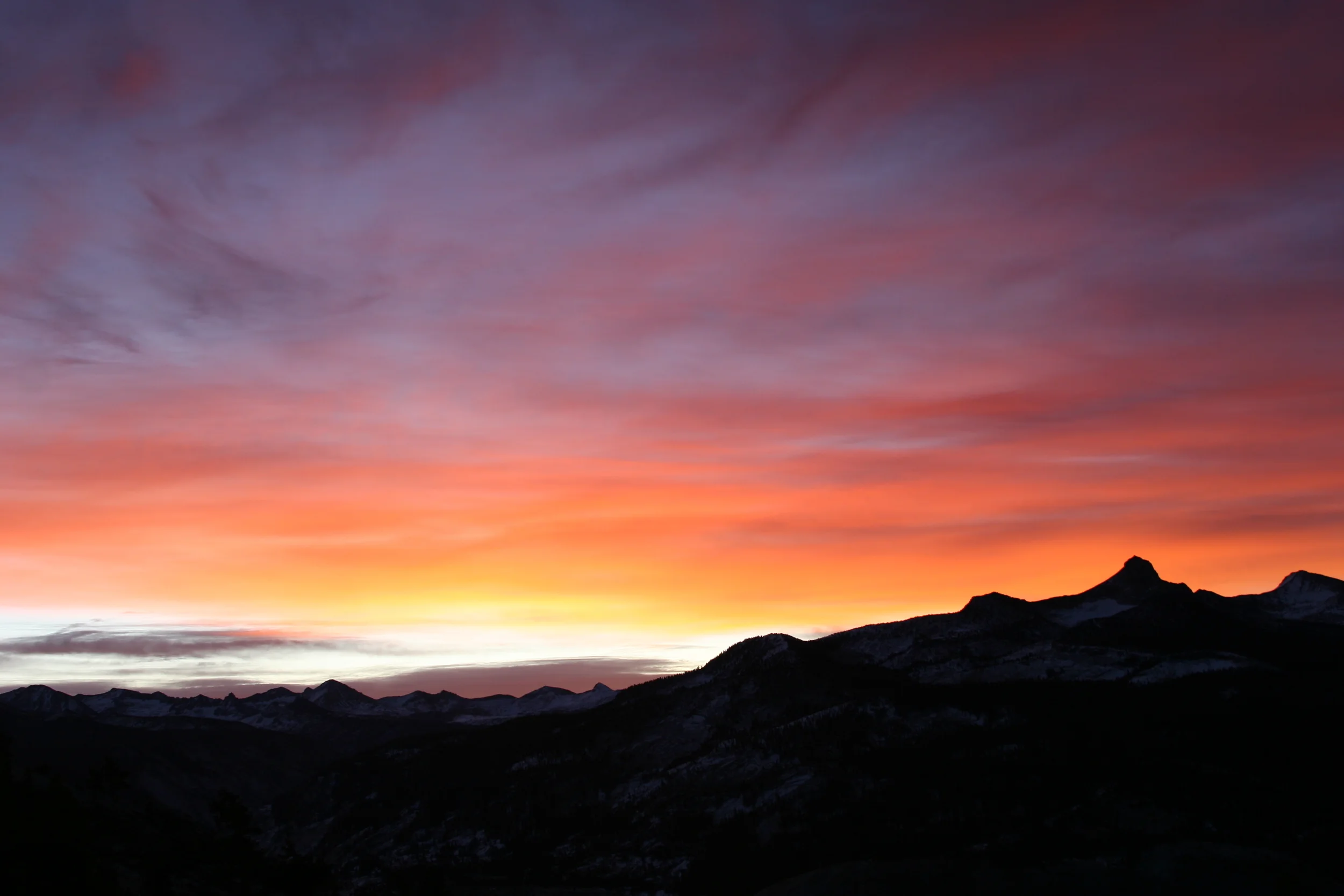
One of my annual traditions is to head out to San Jacinto in the wintertime to partake in some of the best backcountry skiing in Southern California. However, if I’m being honest, it looks like this tradition is going to take a one-year hiatus based on the conditions I saw on Sunday, January 23, 2012, as there is not enough snow to get in any runs, unless I’m willing to ride over rocks and more rocks. Perhaps the conditions will change in the next six weeks, but at this point, as I noted yesterday, it looks like a drought year for us, which means no backcountry skiing on San Jacinto. (http://lastadventurer.com/last-adventurers-fieldnotes/2012/1/23/current-snow-conditions-on-mt-san-jacinto-january-2012.html)

 Plenty of fresh powder to go around! (2011)

Forget the snowpack though for now: let me tell you why I think San Jacinto is the best backcountry skiing in Southern California. First, it’s easily accessible – it’s a quick twelve minute ride up the Palm Spring Aerial Tramway to Long Valley, and in a good snow year like 2010 or 2011, you can instantly head out once you leave the tram station. Even in poor years, or late in the season, it’s a short hike/walk up towards Round Valley at around 9000 feet, where you will encounter snow that can be traversed and then skied. Second, there’s lots of variety. You can ski around either Long Valley, Round Valley, or many other portions of the park on relatively flat terrain; and there is plenty of downhill terrain either on the face of the peak proper, or in various chutes and small hills. In this respect, the terrain can be great for beginners – or for experts looking to get in some serious backcountry runs.

In my experience, should there be enough snow, and should you be willing to invest some effort into traversing with skins or on ski, or hiking on foot, you can get a good run of approximately 1500 vertical feet in – not too shabby! Third, unlike Baldy, and the terrain around it, it’s not too busy. Sure, you’ll pass people in Long Valley, but once you get out in the open, you’re going to find fresh powder – I guarantee it. In this respect, I’d say San Jacinto is one of the more unknown areas to ski in, even though it’s readily apparent to everyone.

Getting ready for the ~1500 or so foot vertical run. (2011) Tips: I always try and head up the day after a storm, because there will be fresh powder everywhere. Even if I can’t make it after a storm, I arrive at the tram station early to catch the first tram up at 8:00 am as the tram cars fill up as the day progresses, and it’s a hassle dealing with a full tram and all of your gear. Do also note that a permit is required for traveling past Long Valley, but such permits are free, and are found at the Long Valley Ranger Station. I always have the proper gear for this trip – map, compass, GPS, and spare clothes, among other things, just in case the tram stops running, or something else comes up. I generally also carry/wear my Avalung, but I’ve never had to use it there. I also make sure to have lots of high caloric foods and to have lots of energy, because there are no lifts after the tram, and you will be expending a lot of energy on whichever runs you do go on. Lastly, do note that the weather can change on San Jacinto fairly quickly, and the summit region does get hit pretty hard at times by high winds, which can lead to some fairly iced out conditions, so exercise the proper care.

With those things in mind, the next time there’s a mammoth dump of snow in Southern California, and you want to experience acres of wide open backcountry, check out San Jacinto – but just realize that it might be 2013 before this happens! 


More Information: http://www.parks.ca.gov/?page_id=636, http://www.mtsanjacinto.info/index.php, http://www.pstramway.com/, http://inthewildernesswithtodd.blogspot.com/2011/03/san-jacinto-backcountry-skiing-2-27-11.html, http://san-diego-ski-club.org/backcountry.htm
Current Snow Conditions on Mt. San Jacinto, January 2012


San Jacinto, 01/22/12 - not much snow!

Yesterday was basically a 1980's adventure revival day as I stopped at the Cabazon Dinosaurs (http://lastadventurer.com/last-adventurers-fieldnotes/2012/1/23/cabazon-dinosaurs.html) and headed up the Palm Springs Aerial Tramway for a little hiking. There's nothing really retro - or eighties about the tram these days, as it's a slick, modern rotating machine, but when I got to Long Valley, I had a very retrofabulistic moment (yes, I know retrofabulistic isn't a real word, but it sounds good, right?) when I looked around, and there was almost no snow. At that moment, my exact thoughts were: "Where's the snow?!?!?" As you can see from the photos, there was little to no snow at around the ~8500 foot mark that Long Valley sits at. As I walked along the valley, both East and West, I'd say the snow depths were running at ~1-3 inches, variable, mostly melted off, and what base layer remained was almost completely iced out. Keep in mind that these conditions were after the "winter" storm we received in the Southern California region, which obviously left no accumumulations at this elevation. From Long Valley up to Round Valley, there was spotty accumulation, mostly under deep tree cover and around the rocks of ~2-4 inches, variable; with an occasional "drift" of a foot or more (again, completely iced out). More often than not, even up to around ~9500 feet, there were bare spots of dirt, and no snow coverage whatsoever. 

San Jacinto, 01/22/12 - where's the snow?!

This is in start contrast to last year, 2011, when I was on the summit in April, and there was still a substantial amount of snow from Long Valley on (several feet), and from 2010 when I headed up the to the summit on Memorial Day in several feet of snow from Long Valley. While a storm is passing through today, the ten day shows nothing but sun. At this point, it looks like we will be experiencing a drought year, which, while good for peakbaggers, is bad for fire conditions. If you are planning on heading for the summit at this point, I'd strongly recommend microspikes/crampons due to the prevalance of ice on the trail and summit approach.

Pray for snow!


More Information: http://www.parks.ca.gov/?page_id=636, http://mtsanjacinto.info/viewforum.php?f=1&sid=6fa45979eed52ba5ffc35100ff9cc233

Cabazon Dinosaurs

Time waits for no man - or in this case, no man, and no dinosaurs. Among other places, I grew up in Southern California, and while growing up, I made a fair number of trips out to the desert with my parents. One of my favorite things about heading out to the desert was that part of the I-10 after Beaumont where the freeway crests a slight hill, and you can see for miles down into the valley where the windmills churn before Palm Springs. At that point, day or night, the main thing you could see breaking the desert panorama were the larger than life shapes of two dinosaurs resting comfortably. In my head, I could picture them lumbering off into the distant hills, or chasing cars full of tourists like myself looking for an easy meal. If you stopped there, the parking lot was full of eager, chattering people, and a lot of over-exuberiant kids. After all, what kid didn't like dinosaurs - or venturing into a dinosaur's belly? 

That was then, and this is now. Today, the dinosaurs - Mr. Rex and Dinny - are obscured behind a Burger King, and some other restaurant, and not so visible from the I-10 East. The ownership of the dinosaurs has also changed - as has the message - to a creationist viewpoint of how the Earth and its creatures has been created. Full disclosure here: I'm a firm believer in evolution; but aside from that, it seems wrong to me to use these fanciful creatures to promote a political message - but maybe that's just my nostalgia talking. In any case, the combination - new ownership; behind a fast food restaurant has made it seem more desolate and different to me than what I recollect from my memories "back in the day". Nevertheless, how can you pass it up if you're in the area? It's right off the I-10 in Cabazon, so you can't miss it.

See you under the dino's feet!

More Information: http://en.wikipedia.org/wiki/Cabazon_Dinosaurs, http://www.yelp.com/biz/cabazon-dinosaurs-cabazon


Kelso Dunes

Kelso Dunes

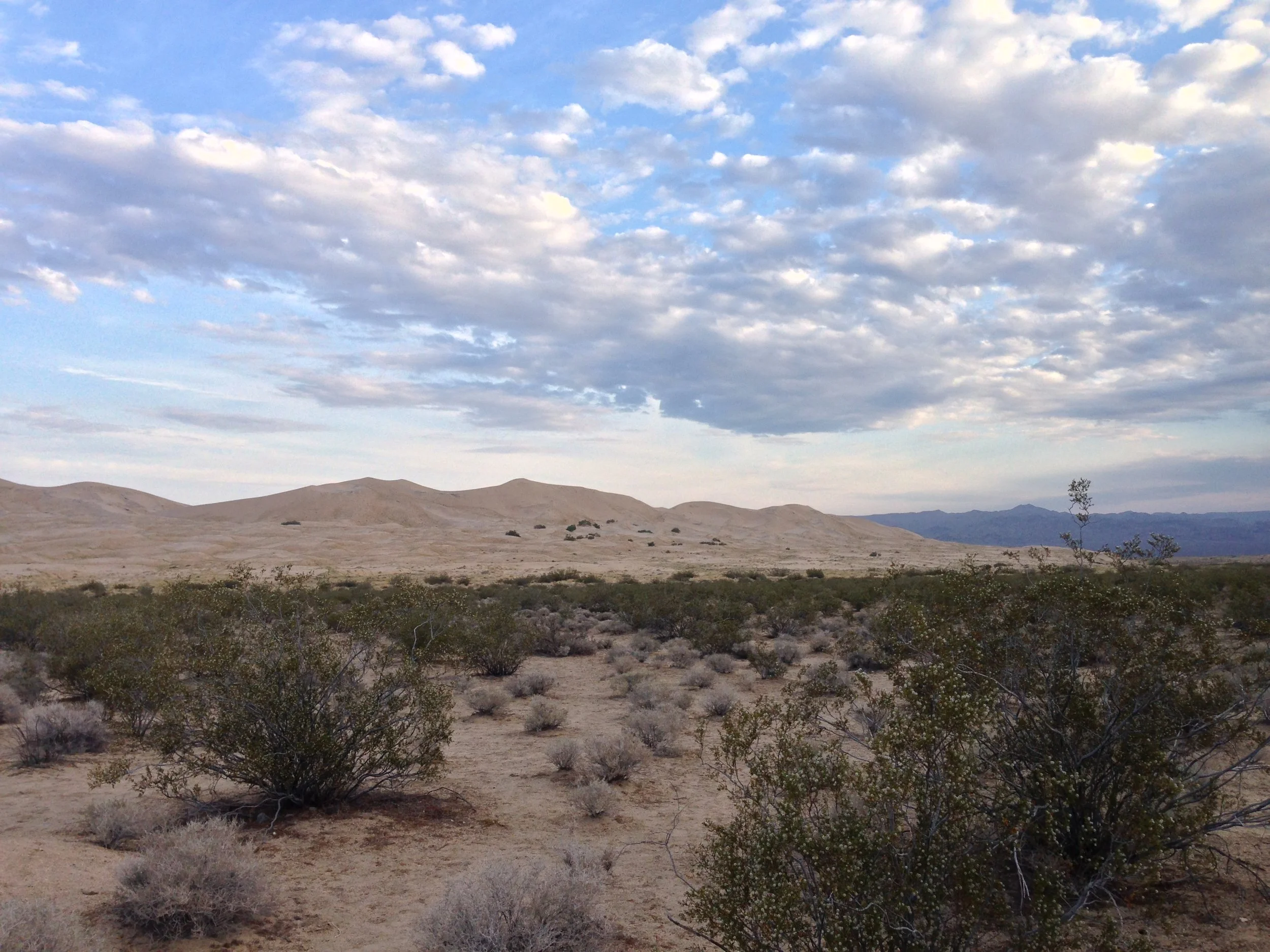
If you've been around California, you know that there's a few places where the sand talks. Yes, that's right: the sand talks. In certain places as the sand saltates against your legs you can hear the whispering plink plink plinks of it bouncing off of your body. In other places, when you're out in the deep mountains of sand, you can also hear the dunes speak you with a deep bass timbre, in rumbling chords that go booooom ssssssss booooom. One of the best places to experience this phenomena is the Kelso Dunes, in the Mojave National Preserve, or as some people call it, Tatooine. The Kelso Dunes were one of the locations where the original Star Wars was filmed; and if that wasn't enough of a reason to visit, it is also world-renown for the booms of its singing sand

Zzyzx, Mojave National Preserve

Zzyzx! It sounds like a species or planet from Douglas Adams’ Hitchhiker’s Guide to the Galaxy. It also sounds like a dread sickness, “After Bart got the zzyzx, he only lived one minute!” Or, if you’re heading North on the I-15 to Las Vegas, and it’s late at night, the word and exit (the last exit before Baker) makes you think, “Zzyzx – man, I wish I was in Vegas so I could get zome zzzzzzzyzx of my own”(even though everyone knows that no one sleeps in Vegas!). Or, if you’re on your way back from Vegas, the word sounds like the best curse ever, because you’ve been stuck in 110 degree traffic for the last hour on the I-15 South, and you lost all of your money, and the girl/guy you were with. In this case, you’re probably thinking, “I got your ZZYZX right here you son of a sea monkey!!!”

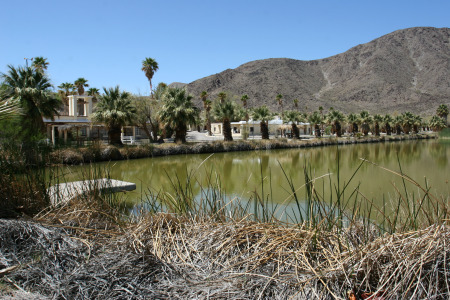
However, if you’re a true desert wanderer, you’re not thinking any of these things. You’re thinking, “Hey, that’s a mighty strange term – I wonder what exactly is off Zzyzx???” And, since I am a true desert wanderer, let me tell you what’s off Zzyzx road (just in case you elect not to stop). To the North, there’s desert, and desert tortoises. To the South, there’s more desert – Mojave National Preserve desert, to be exact, and if you follow the road down, you’ll see a sign that says this “Zzyzx, 6 miles”. If you continue following the road, you’ll wind along some salt flat, and the road will go from paved to graded gravel, to paved again, and then to gravel, and then you’ll be in a parking lot outside of the town of Zzyzx.

Astute observers and readers are now likely muttering at their screens, “What? You’re telling me there’s a town in the middle of the Mojave called Zzyzx? Yeah, right. I’d have heard of this before. Nice try!” To this, let me assure you that had you been alive in say, 1944, you would have definitely heard of Zzyzx – on a little box called the radio. Back then, it was developed by Curtis Howe Springer, who had his own radio show promoting the water (yes, there’s water – and lots of it there), selling the water, and promoting his own health spa and yes, radio evangelism. Prior to that, it was called Soda Springs, and inhabited thousands of years ago by prehistoric man. Today, what remains is pretty much all of the town built by Springer, which is now the California State University Desert Studies center. While classes are held there regularly, every time I’ve been there, the place has been empty and deserted. This brings me to my last point about Zzyzx – it’s eerie. When its high noon, and you’re standing by the abandoned swing set on the Boulevard of Dreams (actual street name), you start to wonder where the inhabitants are, and what happened to them. Then you start to wonder, “Are they coming to get me? Is this a horror movie? Is what got them going to get me??” Or maybe that’s just me. Horror movie qualities aside, the town has a cute art deco feel and interesting street names, so if you’ve been stuck in traffic, or want to see a part of America that’s disappeared, check it out – Zzyzx.

Directions: See above, but first exit after Baker, or first exist before Baker. Zzyzx exit, of course.

Tips:What, you need more? I mean, really, I think this whole post is a giant tip. How many of you knew there was a town out in the Mojave also called Zzyzx? I thought not. Ok, ok. I say, wait for a starry night, and drive out to the town while listening to a little Blue Moon by ol’ blue eyes himself, Frank Sinatra to get a feel for how Zzyzx was in its heyday. That, and don’t drink the water out there: Springer may have sold it, but was ultimately busted for being the “King of Quacks”! (There’s also a good recording of Springer at the Kelso NPS Museum, should you wish to listen to his radio claims).

More Information:http://www.nps.gov/moja/planyourvisit/zzyzx.htm, http://en.wikipedia.org/wiki/Zzyzx,_California, http://en.wikipedia.org/wiki/Curtis_Howe_Springer, http://www.weirdus.com/states/california/fabled_people_and_places/zzyyxxzz/index.php

The Mojave Desert Tortoise Application and CA Desert Application

It used to be that you'd head out to the wilderness with nothing but a map, compass, and dagnabit, a film camera on your back, along with other things that comprised your ten essentials. That was then - and this is now. Today, most of us carry a smartphone, which, among other things, can be your camera, GPS unit, map repository, and many other things. I'm an avid iPhone user, and I definitely am always looking for new applications to go along with my existing group of battery draining applications.

Since I've been talking about the desert for the last couple weeks, it seemed like a good idea to review two of my new favorite desert related applications.

Watch for Tortoise!The first is the Mojave Desert Tortoise App, and it can be found here: http://itunes.apple.com/us/app/mojave-desert-tortoise/id400806083?mt=8 . This is a great little app that has a quick quiz about the Mojave Desert Tortoise and its lifestyle, as well as handy facts, should you be lucky enough to see one, and even more importantly, should you be lucky enough to see one, a way to take a picture and upload it to researchers seeking to better understand and protect the tortoise - so, like the sign says - "Watch for Desert Tortoise"(!). (As a hint, now would not be a good time to use this app, as the Tortoises are hibernating).

Second, and equally as helpful is the California Desert Application, which can be found here: http://itunes.apple.com/us/app/ca-desert/id431028825?mt=8. This is a great little app with an intereactive map of desert areas, an interactive interface regarding different activities that are available in these areas, and a section for recent news and events going on in those areas.

Also, the best news about these apps is that they are both free, so should you have an iPhone, and plan to be out exploring in the local Southern Californian Deserts, be sure to check them out!

See you on the Interwebs!

Rings Loop Trail

Rings Loop Trail

Every National Park has its own signature “must-do” hike. In Yosemite, it’s the Mist Trail and Half Dome. In Zion National Park, it’s Angels Landing. And, in the Mojave National Preserve, the signature hike is probably the Rings Climb/Ring Loop Trail. I say “probably” because I have to admit that I’m a big fan of hiking around the Kelso Dunes when I’m in the Preserve; and in my mind, it’s a tough call deciding between the two. However, in terms of pure hiking, I’m going to have to stick with my initial call: the Rings Climb/Ring Loop Trail is the signature hike of the Preserve.