Sentinel Dome Trail (2012)

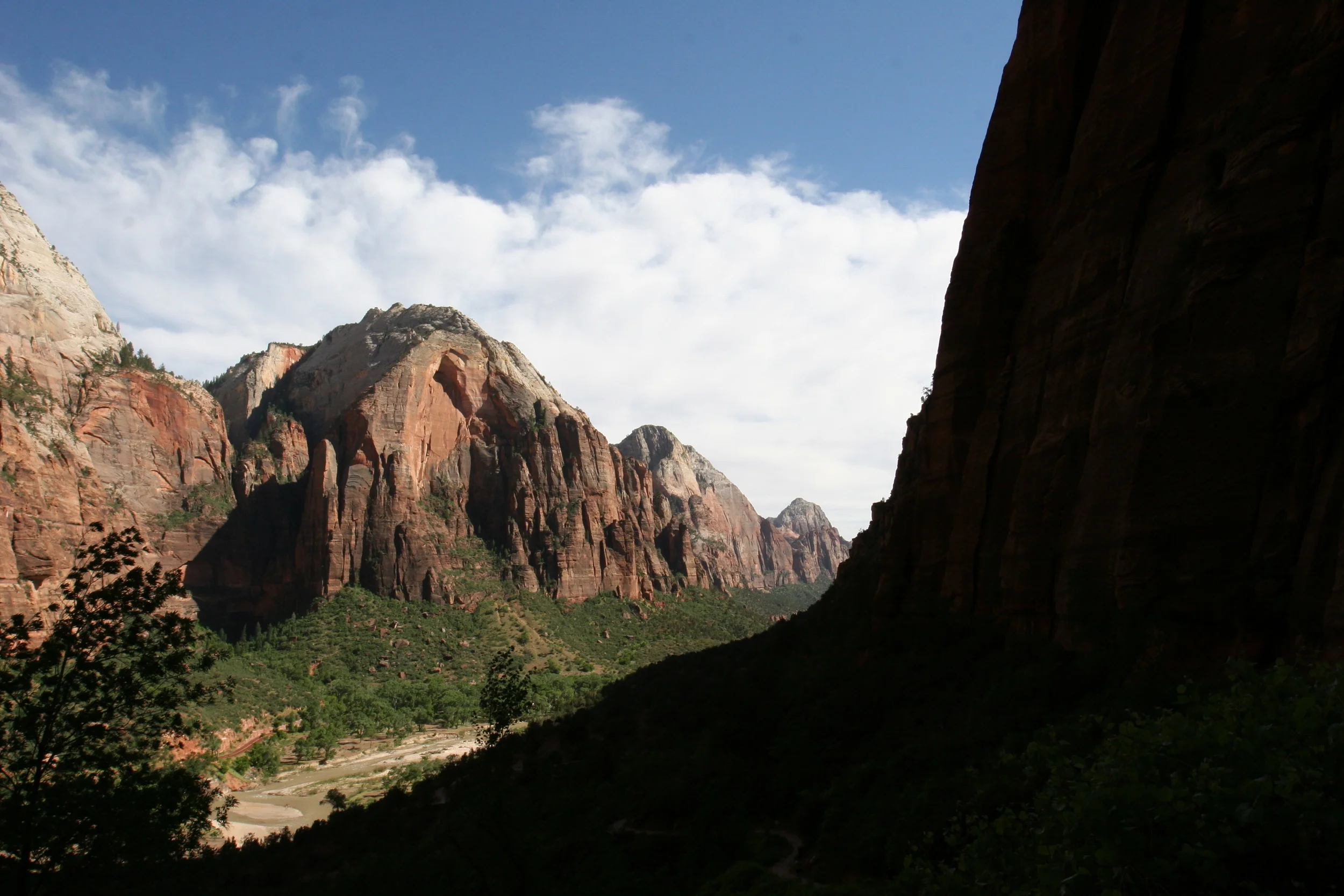
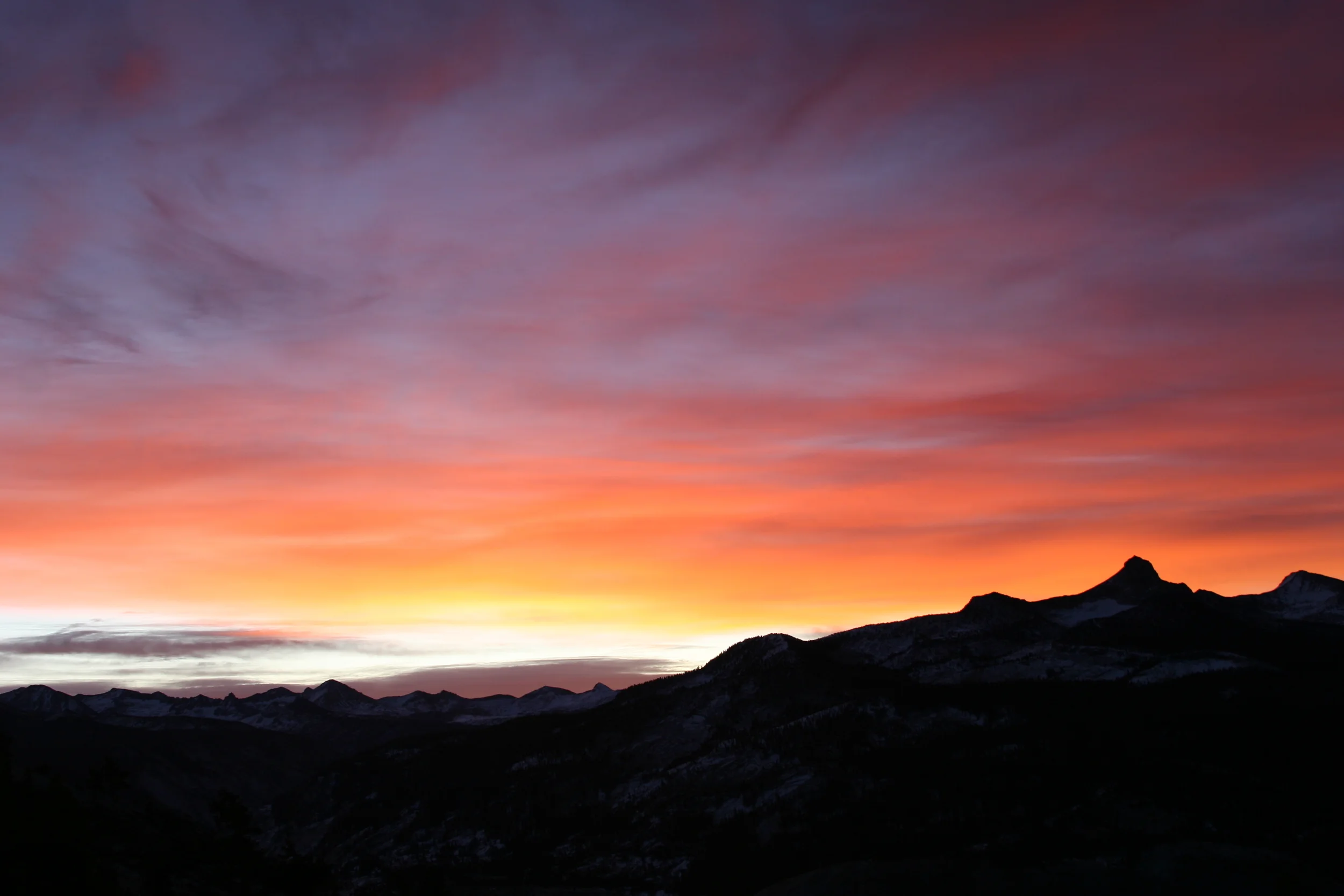
Sentinel Dome Trail, Spring 2012When I was in Yosemite a couple weeks ago, I had the opportunity to get up and about on the South Rim for a bit. As always, the South Rim still has a bit of snow accumulation that remains due to less sun exposure and higher elevations. Rather than take in the view of the High Country from Glacier Point, I elected to take an early morning walk up to Sentinel Dome to see how the park looked in early spring while I ate my breakfast. I parked at the Sentinel Dome trailhead, a couple of miles shy of Glacier Point, and noticed two things: that the meadow at the trailhead still had occasional drifts of snow that were approximately six (6) inches to one (1) foot high in several locations; and that these drifts completely covered the trail heading South towards Taft Point.

Since I wasn’t heading toward Taft Point that day, I had no route-finding concerns, and immediately set out across the meadow toward Sentinel Dome. After crossing the meadow, I encountered my only route-finding challenge of the day, crossing the creek within .10 miles of the trailhead. From the South side, the bridge was not readily apparent at that point in time; however, the creek was not running high enough that it could not be crossed in several other locations, which is what I did with a quick jump. From that point, the trail was easily visible, and had little to no snow accumulation present on it.


At about the half mile mark from the trailhead (.5) there was a large tree that had fallen and was blocking the trail, but aside from that, the trail was clear and easy to follow all the way to the summit. The only snow accumulation I saw on the trail was on the final ascent of the dome, which had some small lingering snowfields of slushy snow by midday. I don’t expect that those remaining patches of snow on the dome will last much longer due to the direct sun exposure they are receiving. From the summit, I had a great breakfast view of the surrounding areas, which made me really realize what a dry winter California experienced, but other than that, it was a great hike!

Directions: I followed the standard route that I discussed here: http://lastadventurer.com/last-adventurers-fieldnotes/2011/12/8/sentinel-dome-yosemite-national-park.html, and based on the conditions, anytime between now and winter would be a great time to do this hike.

Sentinel Dome Summit, Spring 2012

Missing Hiker Found Dead in the Arroyo Tapiado

A couple of days ago, I was talking to a friend of mine, and she casually mentioned that the body of Guillermo Pino was found "in some caves somewhere in the desert". At the time, I didn't know what she was talking about - I hadn't heard of Guillermo Pino, and her description of the area -"some caves" was incredibly vague. I had some theories, however, and after a few questions I realized we were talking about the Arroyo Tapiado Mud Caves, an area I am fairly familar with, and an area I talked about earlier this year (http://lastadventurer.com/last-adventurers-fieldnotes/2012/1/3/the-arroyo-tapiado-mud-caves.html), and an area I was most recently in a year ago. When I got back home, I searched the internet and found out that Guillermo Pino did indeed go missing in the Arroyo Tapiado Mud Caves, and that his body was indeed found there recently. (http://cavingnews.com/20120507-body-of-missing-hiker-found-in-crevice-arroyo-tapiado-mud-caves, http://ramona.patch.com/articles/guillermo-pino-body-in-anza-borrego-cave-successfully-removed-identification-pending, http://blogs.laweekly.com/informer/2012/05/guillermo_pino_missing_anza-bo.php).

Obviously, at a time like this, one first feels enormous sympathy for the deceased's family, and for the deceased himself - this is a tragedy for all of them, and a very sad day for the hiking community in general. The lesson to take from all of this, however, is to always recognize the risks attendent in outdoor activities, and to always be properly prepared for whatever adventure you are attempting. In this respect, its always a good idea to have someone with you, and if you don't have someone with you, have left a detailed plan of where you are going, when you will be back, and possibly to have some sort of portable beacon (GPS or otherwise, such as SPOT: http://www.findmespot.com/en/). The thing that stands out about Guillermo's death is my recollection of the Arroyo Tapiado last year. I remember my friend Jaime and I explored a number of caves; and that the caves closest to the "parking area" were somewhat busy with people (somewhat busy meaning that there was minimal foot traffic going in both directions). But as we delved deeper into the caves, into chambers and other areas off the beaten path, there were no other visitors. At that point, it could have been easy to get lost - and this was in conditions that were pretty much optimal (warm day, other cave visitors).

The end result of this is that sadly, as mentioned above, a young man is dead. The other end result is that traffic to this area - the Arroyo Tapiado - will increase. While thats a macabre thing to say, it is also true. This is an area that has become more popular over the last five years as more people have become interested in outdoors activities, and now that it is in the news, the sensational aspect will no doubt attract more visitors ("hey, this is the cave that someone DIED in"). Disrespectful as it may be, this is how the world works. With this in mind, hopefully future visitors remember to take the necessary precautions needed for visits, and remember to be careful. Because, while the world is beautiful, as Guillermo noted, it is also dangerous, and the lesson we can take from his death - and honor his life - is to always be prepared when adventuring.  

Mist Trail to Nevada Fall, Yosemite National Park (2012)

Vernal Fall, Spring 2012

After I wrote a couple articles about the Mist Trail last year (http://lastadventurer.com/last-adventurers-fieldnotes/2011/12/15/mist-trail-to-nevada-fall.html, http://lastadventurer.com/last-adventurers-fieldnotes/2011/12/14/the-mist-trail-to-vernal-falls-summer.html), I received a number of e-mails wondering when the best time was to hike the Mist Trail. In all honesty, I’d say now what I said then – anytime is the best time to hike the Mist Trail to either Vernal or Nevada Fall. However, for 2012, if you are looking to experience “the mist” and want to get wet, now would be the best time to hike the Mist Trail.


The reason right now is the best time to do this hike is simple: the snowpack is already melting. As I’ve said on many occasions this year, 2012 was a bad year for the Sierra snowpack as California has had a warm winter. At this point, from about two weeks ago until mid-summer, what snow was present at the higher elevations will be melting – and at times, melting rapidly. This means that this year, from mid-to late summer, the rivers and seasonal flows will be running at a low level, or not at all. When rivers and other seasonal flows are at a low level, what waterfalls that exist flow at a low level, or not at all.

Mist Trail, Spring 2012

So, if you want to get wet, now, is the time to go for 2012, before all of the snowpack melts. When I was recently in Yosemite, I hiked the Mist Trail up to a tenth of a mile under Nevada Falls. I would have gone all the way up to Nevada Falls and come back down the John Muir Trail, but earlier in the day I had been hiking in another area of the park, and at that point, was perfectly content to take it a little easy.

From what I saw on my hike, the trail is in good to excellent condition, with few dead trees and branches on the trail to Nevada Fall. No snow remains on any section of the trail to Nevada Fall, and from my observations of that area as well as other areas of the park, the snowline is running at ~8500 feet or higher, depending on the sun exposure of the area. As conditions are warm, and only going to get warmer, it’s a great time to get out and do this hike!

Directions: As noted in previous articles, you’re going to either want to take the Yosemite Park Bus to Happy Isles, where the trailhead for the Mist Trail is, or you’re going to want to bike or walk there. Further directions on distances and everything else can be found here: http://lastadventurer.com/last-adventurers-fieldnotes/2011/12/15/mist-trail-to-nevada-fall.html, http://lastadventurer.com/last-adventurers-fieldnotes/2011/12/14/the-mist-trail-to-vernal-falls-summer.html .

More Tips: Another good reason to hike this trail this time of year is the opportunity to see wildlife – on my recent hike, I saw a number of animals that will likely not be present during the busy summer season. As for traffic on the trail: it was busy, but it will only be getting busier as the season progresses, so get out there to avoid the rush while you can!

Nevada Fall, Spring 2012

Chapel of the Holy Dove, Kendrick Park, Arizona

One of my core beliefs is that there's something mysterious and magical in every aspect of life. Sometimes these mysterious things and places are right in front of us - strange plaques in city parks, for example (http://lastadventurer.com/last-adventurers-fieldnotes/2011/12/1/the-white-deer-of-mission-hillsinspiration-point-1.html); and sometimes these places are almost myths in that they are difficult to find, like lost cave art (http://lastadventurer.com/last-adventurers-fieldnotes/2011/12/30/the-blue-sun-cave.html); and sometimes, they're just place you stumble upon when your on your way from Point A to Point B.

Chapel of the Holy Dove

The only trick about the last kind of place is that you have to keep your eyes open so that you can see what the world is presenting to you. A good example of the last type of place is the Chapel of the Holy Dove. A couple weeks ago, I was leaving the Grand Canyon on the heels of a late spring snowstorm; and as I drove down the snow covered Highway 180, I saw something on the side of the road that caught my attention. There, in two and a half feet of fresh snow was a small structure with only forest and distant mountain peaks as its neighbors. The sign next to it read, "Chapel of the Holy Dove". 

Snow was swirling over the road and my windshield, but I was curious, even though the warmer option would have been to keep driving. I pulled over as far as I could, hit the hazards on my car, and waded through the powder to the door. It was a small door - the type Bilbo Baggins would have in his burrow. Not expecting it to be open, I tugged on it - and was surprised when it opened partway into a drift of snow. Inside were rows of benches, a solid beamed roof, and an expanse of glass windows looking into the forest. I took a few minutes, and learned all about the Chapel - how it had been built by a Doctor who had worked at the Grand Canyon; how it had burned down in a fire and rebuilt, and how it was open to all. I noticed the prayers, comments, and thoughts that other visitors had placed on the roof and walls in a respectful way.

Chapel of the Holy Dove

Most of all, I felt the feeling of serenity that the Chapel gave me. I'll be honest - I'm not always the most religious person, but the feeling of comfort and peace that the Chapel provided me was close to how I'd like religion to be for the world. After a few minutes I got back into my car, and drove back into the storm; but I'll always remember that spot because I had the vision to see it, despite the storm that was around me. So, my advice for anyone out there is always keep looking, because there's plenty of blank spots left on the map still - you just have to find them for yourself.

Directions: The Chapel is right off the Highway 180, eighteen (18) miles North of Flagstaff.

 Walls of the Chapel of the Holy Dove

More Information:http://www.yelp.com/biz/chapel-of-the-holy-dove-flagstaff http://joeorman.shutterace.com/Bizarre/Bizarre_Holydove.html


South Kaibab Trail to Ooh-Ahh-Point, Grand Canyon National Park

South Kaibab Trail to Ooh-Ahh-Point, Grand Canyon National Park

Did you know that over five million people visit the Grand Canyon on a yearly basis, and most of those people visit the South Rim?  If you’re even remotely interested in hiking and wilderness activities, you probably did, as the Grand Canyon is one of the top National Parks every year. But – did you know that only 3% of Grand Canyon park visitors (approximately 150,000 people) head below the rim of the Grand Canyon? I’m guessing that you didn’t, because I didn’t know it, and I know a lot of arcane wilderness lore. Let me give you some disclosure though: I don’t know where Bill Ferris got that statistic – I Googled it for a little bit, and I didn’t come up with anything.

Observation Point, Zion National Park

Observation Point Trail through Echo Canyon

Last week, I was talking about the signature hike of Zion National Park, Angel’s Landing. As I mentioned last week, Angel’s Landing is not just a signature hike for Zion, but for North America too. However, there’s a downside for being the signature hike of Zion – crowds. If you’re someone who likes to hike to get away from your fellow man, Angel’s Landing probably isn’t for you, unless you’ve managed to find one of those rare weekdays during the off-season where the trail is relatively empty. So, if you like solitude – or if you like even more of a challenge than the distance present in the Angel’s Landing hike, the Observation Point hike is the hike for you.

I’ll never forget the first time I hiked out to Observation Point – I was young, and capable of covering distance in huge chunks. I got an early start on the hike, and by the time I was halfway through Echo Canyon, was feeling confident and cocky. In my head, my inner monologue was already crowing that the hike was not strenuous and not difficult at all. Then, the mid-morning temperature spiked into the low nineties and by the time I was heading up the final ascent of the White Cliffs, my legs were burning, and my inner monologue was strangely silent. While this hike may not be “strenuous” like the National Park Service says, at eight miles roundtrip it is not an easy walk in the park either.

Directions: Zion Canyon is only accessible by foot, bike, or the National Park Service bus service that runs the length of the canyon. Unless you are looking for a real challenge, I suggest that you take the NPS bus to the Weeping Rock Trailhead. From the trailhead, the trail immediately begins to head uphill through a series of switchbacks. At half a mile (.5), you will have ascended several hundred feet, and will have great views of Angel’s Landing and the Virgin River below (although, there are better views to come!). It is at this point the trail forks, and if you have the time, you can head into Hidden Canyon. Unless you get an early start, I’d recommend against the side trip into Hidden Canyon, as you still have 7.5 miles of hiking left to do to get up to Observation Point and back down! Having said that, if you’ve got the time Hidden Canyon is a pretty spot with great slickrock hiking and views.

 Zion Canyon, top of Observation Point

Once you are past the Hidden Canyon trail junction, the trail winds around into Echo Canyon, which aside from the views at the top is probably the best feature of the hike. Echo Canyon is a great spot to stop and linger before you head up the remainder of the switchbacks through the White Cliffs. At one and a half miles (1.5), there will be another junction to the East Rim Trail, which will take you to Cable Mountain and various other points deeper in Zion’s backcountry. Stay on the Observation Point Trail, which is well marked by the National Park Service and continue up the remainder of the switchbacks through the White Cliffs.

Depending on what time of day it is, these switchbacks may seem pretty brutal as you may be slogging uphill under clear blue skies, sun, and hot temperatures, so plan accordingly and bring plenty of water. The good news, however, is that once you reach the top of the White Cliffs, you will find yourself on a somewhat sandy mesa, and the remainder of the hike along the top of the canyon to Observation Point is largely level.

Angel's Landing as view from Observation Point

From Observation Point, you will have a fantastic view of Zion Canyon, and Angel’s Landing and the Virgin River below. Once you have had your fill of the view, follow the trail back down the way you came up for a total distance of eight miles roundtrip, and an elevation gain of 2,148 feet.

Tips: I’d say that the best time for this hike is anytime but July or August when it is hot. However, should you be in Zion during those months, you shouldn’t avoid the hike just because it’s a little warm. If you plan accordingly, you’ll have a great hike through Echo Canyon and great scenic views from the top, along with some much needed solitude.  


More Information: http://www.nps.gov/zion/planyourvisit/loader.cfm?csModule=security/getfile&PageID=533013, http://www.naturalbornhikers.com/trails/observationpoint.html, http://hikearizona.com/decoder.php?ZTN=2723, http://www.citrusmilo.com/zionguide/obspoint.cfm, http://www.zionnational-park.com/zion-observation-point-trail.htm

Angel's Landing, Zion National Park

Angel's Landing, Zion National Park

As I’ve mentioned before, every National Park has its own signature hike or moment. For Yosemite, it’s the Mist Trail (http://lastadventurer.com/last-adventurers-fieldnotes/2011/12/14/the-mist-trail-to-vernal-falls-summer.html); for Death Valley, it’s Golden Canyon (http://lastadventurer.com/last-adventurers-fieldnotes/2012/3/6/golden-canyon-to-red-cathedral-death-valley-national-park.html); for Mojave National Preserve, it’s the Ring Loop Trail (http://lastadventurer.com/last-adventurers-fieldnotes/2012/1/10/ring-loop-trail-mojave-national-preserve.html); for the Grand Canyon, it’s the South Kaibab or Bright Angel Trails (http://lastadventurer.com/last-adventurers-fieldnotes/2007/6/15/bright-angel-trailsouth-kaibab-trails-grand-canyon-national.html?SSScrollPosition=0); and for Zion National Park, the signature hike is Angel’s Landing. If that didn’t get your attention, this will: in my opinion, Angel’s Landing is not just a signature hike just for Zion, but a signature hike for all of Utah; and is definitely one of the top hikes in the United States.