Some people climb mountains for the challenge; some people climb mountains because they have a burning desire to be atop high places; some people climb mountains for the physical activity; and some people climb mountains just because they’re there. There’s a million reasons why people climb mountains, and if you run into people on the trail, it’s always interesting to hear why people are there, what they are doing, and if they are lost, help them out by giving them directions and encouragement. One of the most honest reasons I’ve heard for climbing a mountain was on Wildrose Peak by a transplanted Frenchman named Bernard who was living in Los Angeles. Wildrose Peak, incidentally, is the small sister of Rogers, Bennett, and Telescope in the Panamint Range of Death Valley, clocking in at 9,064 feet. On that trip, I had been on a climbing tear – I had powered up Whitney in winter conditions on Saturday, and bagged Telescope, Bennett, and Rogers on Sunday. It was now a Monday, and rather than take it easy – I decided to climb Wildrose Peak.
Telescope Peak
Telescope Peak, in my mind, is a hike full of contrasts. In 2002, I solo climbed Mt. Whitney in day at the end of May, and then got in my car and drove into Death Valley to camp at Mahogany Flat. At sunrise, I was up and on the Telescope Peak trail, and after a few hours of vigorous hiking, had summited Telescope, Bennett, and Rogers well before the day was half over. On that day, it felt like the trail positively flew away under my feet. Then again, I suppose anything after Mt. Whitney the day before would seem easy. However, on a subsequent trip to Telescope Peak, the stretch of trail from Arcane Meadows to the summit seemed to me to be the longest trail ever created. Two things are clear about the Telescope Peak trail: first, that it winds up and around to the 11,331 summit of Telescope Peak, which is the highest mountain in Death Valley National Park and the Panamint Range; and second, that it has stunning views of the surrounding terrain.
Rogers Peak
My favorite thing about Death Valley National Park is the variety that the park provides. The park has the things that everyone expects – blazing hot temperatures, Badwater, and classic desert terrain. But the park also has innumerable things that most visitors don’t expect, such as the Charcoal Kilns and great mountaineering. Yes, that’s right, I said great mountaineering. The most popular mountaineering is on a cluster of mountains – Telescope Peak, Rogers Peak, Bennett Peak, and Wildrose Peak - that are located in the Panamint Mountains. Out of these mountains, Rogers Peak, at 9,994 feet is the easiest to summit, and is a great short day hike from the Mahogany Flat campground.
Charcoal Kilns
Back in the near-distant past, after dinosaurs roamed the Earth, I decided that I wanted to climb Telescope Peak. At that point, I didn’t know much about Death Valley other than what I had read and researched. I know that this was truly a long time ago, perhaps during part of the dark ages, because I had gleaned most of my information from actual books and paper maps. I left after work for the desert, and by the time I reached Emigrant Canyon Road within the park, it was very late. As my car glided over the curvy pavement like a giant bat, my eyes drooped slightly. Suddenly, my high beams caught a glimpse of something grey, brown and large on the road. Automatically, my foot hit the brake before I could say “Blue Moon”. My SUV skidded on its antilock brakes for a split-second before coming to rest.
East Side Trail to Harper's Creek
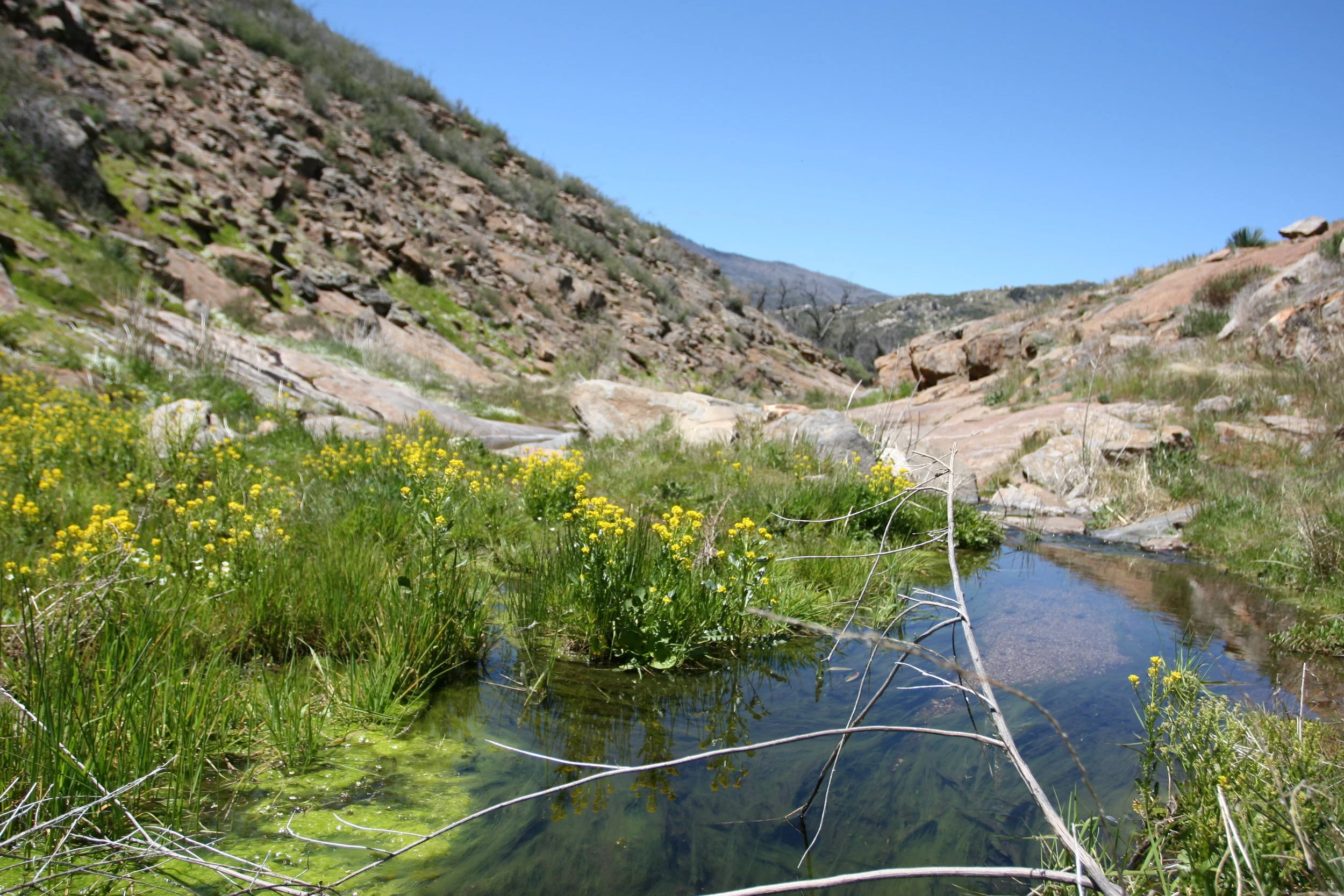
One of my favorite hikes in San Diego is the in-and-out hike in Cuyamaca Rancho State Park of the East Side Trail to Harper’s Creek. However, I must caution you: how much you enjoy this hike will likely depend on when you go. If you head out too early in the season, as I found one year with my hiking group, you’ll be slogging through muddy meadows under slate covered skies and pelting snow. If you head out too late in the season, as I found out another year, you’ll be trekking through dry vegetation to nothing but baked rocks that do not have the slightest hint of water. You may be wondering, “When is the best time to go?”; and I would say anytime in the late winter to early spring is the best time to go, because the seasonal flow of Harper’s Creek will not have dried up yet; and hopefully, you will get to see some seasonal wildflowers.
Corte Madera Mountain
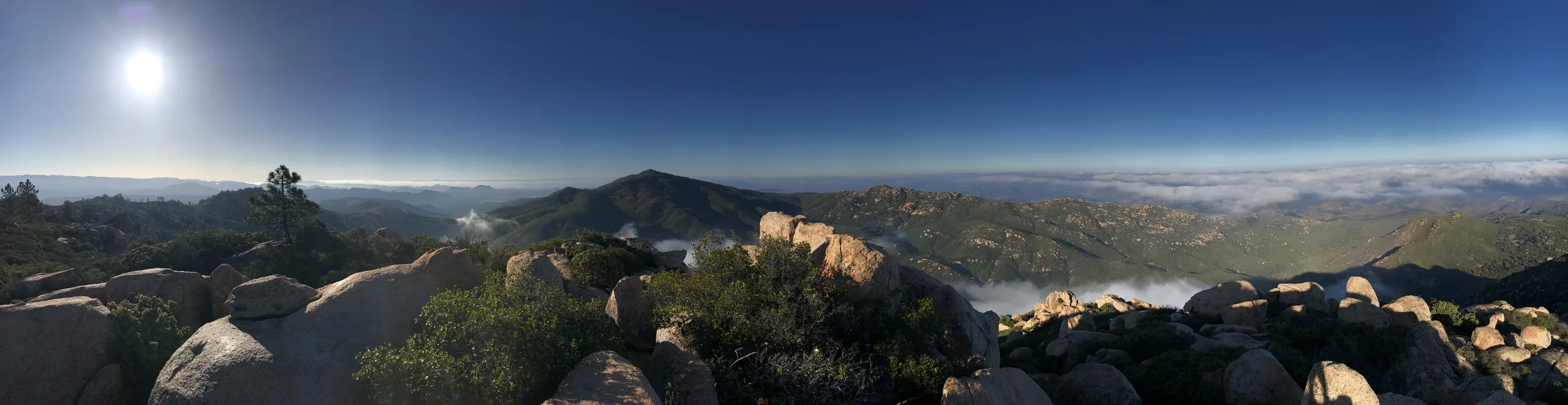
Corte Madera is a granite mountain in the Eastern portion of San Diego; and at 4,657 feet, it has a great view of the surrounding countryside. This is one of my favorite hikes in San Diego County because it’s not well traveled, and because it passes through a number of beautiful areas on the way to the summit. And, as I discovered the last time I climbed it, its register is a good look back to the past, as it contains notes from the last several years.
Cowles Mountain
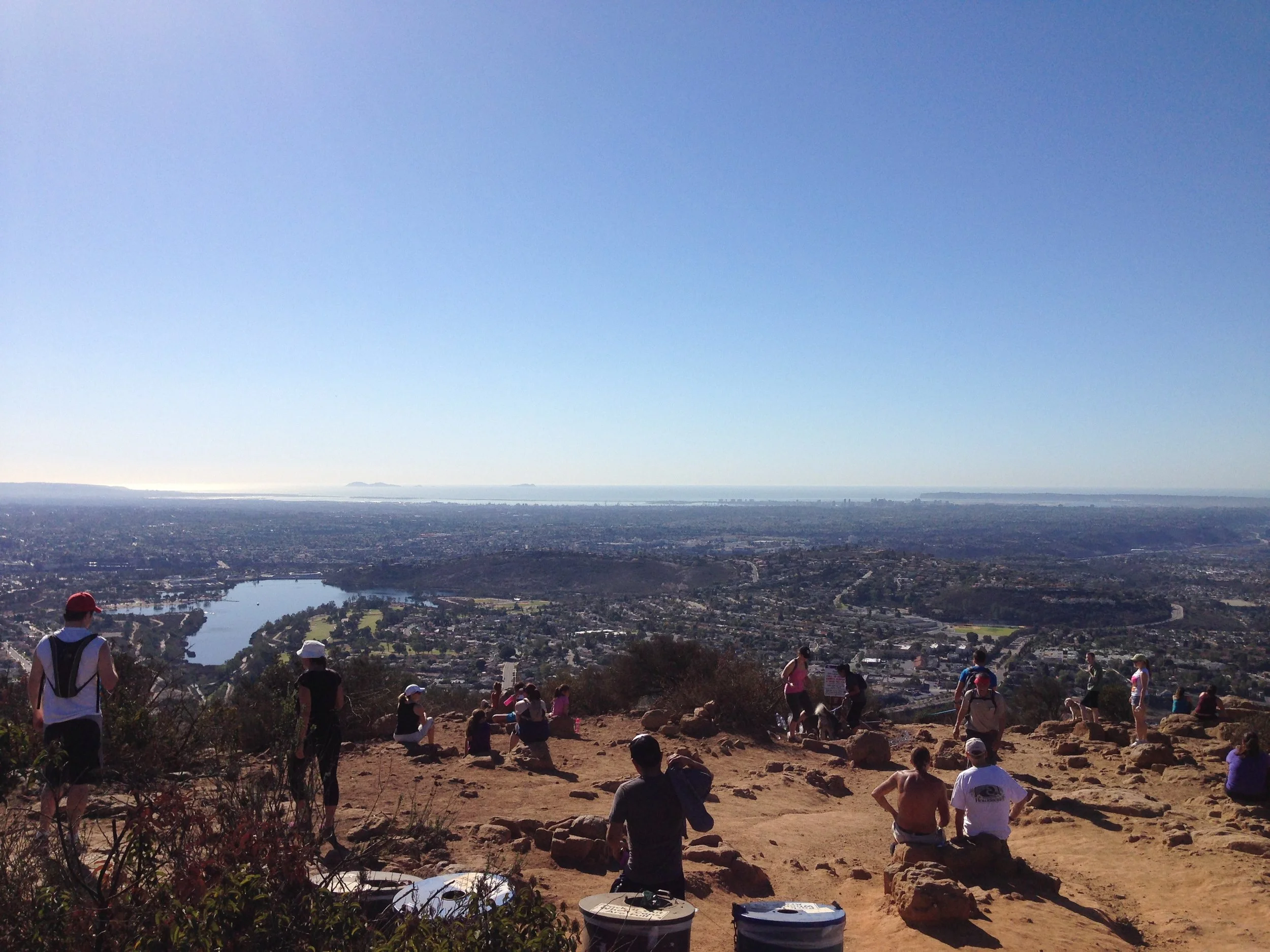
Right behind the second most popular hike in San Diego, Iron Mountain, is the first most popular (cue drum roll) Cowles Mountain. If you even have a remote interest in hiking, or the outdoors, or are even somewhat athletic in that you move around because you are alive, or even if you’re the undead of some sort, chances are that you’ve heard about Cowles Mountain. Like Iron Mountain, Cowles Mountain is a popular hike. In fact, saying that it’s popular is like saying that the Interstate 5 through Los Angeles during rush hour is congested. It’s a classic understatement. As Cowles Mountain is located very close to the core of San Diego, there are people on this trail at all hours. I have been on this trail at all hours of the day and night, and frankly, as I said about Iron Mountain, I defy you to find a time when people are not on the trail.